
Why Dallas–Fort Worth Continues to Lead Commercial Real Estate Investment in Texas
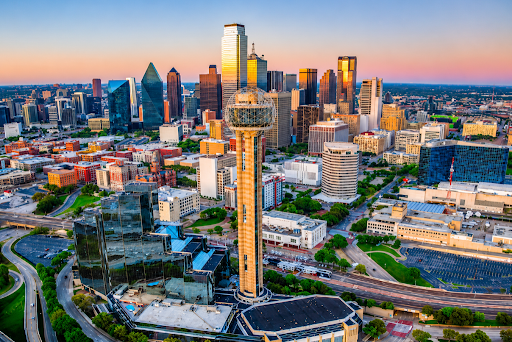
Markets change. Demographics don’t.
When evaluating commercial real estate opportunities, successful investors look beyond short-term market cycles. They focus on the long-term fundamentals that drive tenant demand, support occupancy, and create lasting value.
Few metropolitan areas embody those fundamentals as consistently as Dallas–Fort Worth (DFW).
Over the past several decades, DFW has evolved into one of the country’s most dynamic commercial real estate markets. Sustained population growth, a diversified employment base, corporate expansion, infrastructure investment, and continued housing demand have positioned the metroplex as a leading destination for commercial real estate investment within Texas.
At Masina Investment Partners, every investment begins with market selection. Rather than chasing speculative appreciation, we focus on regions where demographic and economic trends create durable demand across multiple property sectors. Dallas–Fort Worth continues to exemplify that philosophy.
Why Market Selection Matters More Than Ever
Location has always been one of the most important principles in real estate. In commercial real estate, however, selecting the right market involves much more than choosing a desirable address.
Investors should evaluate the long-term fundamentals that influence property performance over time. Markets supported by growing populations, expanding employment, business investment, and strong infrastructure often provide a more durable foundation for commercial real estate than markets driven primarily by short-term momentum.
Dallas–Fort Worth continues to stand out because these long-term drivers are working together, not independently, to support sustained economic growth.
DFW’s Population Growth Continues to Drive Commercial Real Estate Demand
Population growth remains one of the strongest indicators of long-term commercial real estate demand.
Dallas–Fort Worth continues to attract new residents from across the country because of its employment opportunities, business environment, quality of life, and relatively attainable cost of living compared to many other major metropolitan areas.
As the region grows, demand extends well beyond residential housing.
A growing population increases demand for:
- Multifamily communities
- Neighborhood retail centers
- Medical offices and healthcare facilities
- Industrial and logistics properties
- Professional and consumer services
Each new household contributes to the local economy by increasing demand for housing, shopping, healthcare, dining, and everyday services.
For commercial real estate investors, these demographic trends provide long-term demand that supports multiple property sectors simultaneously.
A Diverse Job Market Supports Long-Term Investment
Population growth alone does not create a resilient commercial real estate market.
Long-term success also depends on employment.
Dallas–Fort Worth has built one of the nation’s most diverse regional economies, with major employers spanning:
- Technology
- Financial services
- Healthcare
- Manufacturing
- Logistics
- Energy
- Professional services
Economic diversity matters because it reduces dependence on any single industry.
As employers continue to expand throughout the metroplex, demand grows for apartments, neighborhood retail, warehouses, flex industrial space, medical offices, and a wide range of commercial services.
This relationship between employment and real estate demand is one of the reasons DFW continues to attract both institutional and private commercial real estate investors.
Why Companies Continue Choosing Dallas-Fort Worth
Business migration has become one of the defining characteristics of the Dallas–Fort Worth economy.
Companies continue to establish headquarters, expand operations, and invest throughout the region because of its access to talent, strategic location, transportation network, and business-friendly environment.
The impact of corporate growth extends well beyond office space.
Each new employer creates additional demand for:
- Housing
- Restaurants
- Retail centers
- Distribution facilities
- Healthcare providers
- Local service businesses
As new businesses enter the market, they support a broader commercial ecosystem that benefits multiple property types.
For investors, this diversification creates a more resilient market capable of supporting long-term growth.
Infrastructure that Supports Long-Term Growth
Infrastructure often receives less attention than population or employment statistics, but it plays a significant role in commercial real estate performance.
Dallas–Fort Worth benefits from one of the country’s most extensive transportation and logistics networks, supporting both residents and businesses across the region.
Key infrastructure advantages include:
- DFW International Airport
- AllianceTexas logistics hub
- Major interstate highway systems
- Extensive rail connectivity
- Ongoing transportation improvements
Strong infrastructure improves accessibility, facilitates commerce, and supports continued business expansion.
These long-term investments strengthen demand across multifamily, neighborhood retail, industrial, and flex properties while reinforcing DFW’s position as one of Texas’ leading commercial real estate markets.
Housing Demand Creates Opportunities Across Property Types
Housing demand influences much more than apartment communities.
As more residents choose Dallas–Fort Worth, they create additional demand for the businesses and services that support everyday life.
Growing communities require:
- Grocery stores
- Restaurants
- Medical providers
- Fitness centers
- Childcare providers
- Service businesses
- Distribution facilities
Commercial real estate markets thrive when residential growth and business expansion occur together.
This interconnected demand is one of the reasons Masina Investment Partners invests across multiple commercial property sectors rather than relying on a single asset class.
Why Dallas-Fort Worth Leads Commercial Real Estate in Texas
Texas offers many attractive investment markets, but Dallas–Fort Worth has distinguished itself by bringing together multiple long-term growth drivers within one metropolitan region.
Rather than relying on a single industry or temporary market cycle, DFW benefits from a balanced economy supported by technology, healthcare, finance, logistics, manufacturing, professional services, and energy.
Its strategic central location, robust transportation infrastructure, and continued business expansion have helped establish the metroplex as one of the nation’s most active commercial real estate markets.
For investors, this combination of economic diversity and sustained demand creates opportunities across multifamily, neighborhood retail, and industrial properties.
Why Masina Focuses on Dallas–Forth Worth
Every commercial real estate market experiences economic cycles.
Rather than attempting to predict short-term fluctuations, Masina Investment Partners focuses on markets supported by durable long-term fundamentals.
Dallas–Fort Worth continues to stand out because of its:
- Sustained population growth
- Diverse employment base
- Continued business expansion
- World-class infrastructure
- Long-term housing demand
- Economic resilience
These characteristics closely align with our investment philosophy.
Rather than pursuing speculative appreciation, we seek opportunities supported by lasting demographic and economic trends that can create value over time.
A Diversified Strategy Built Around Local Demand
Market selection is only one component of successful investing.
Masina combines its conviction in Dallas–Fort Worth with a diversified investment strategy across three commercial property sectors.
Multifamily
Supported by continued population growth, household formation, and long-term housing demand.
Neighborhood Retail
Supported by expanding communities and the everyday consumer needs of local residents.
Industrial Flex
Supported by business expansion, logistics activity, and the growing demand for flexible commercial space.
Because each property sector responds to different economic drivers, diversification helps create a balanced portfolio while benefiting from the broader strength of the Dallas–Fort Worth economy.
Investing Where Long-Term Trends Converge
Successful commercial real estate investing begins with identifying markets where multiple long-term trends reinforce one another.
Dallas–Fort Worth offers a rare combination of:
- Population growth
- Employment expansion
- Corporate investment
- Infrastructure development
- Housing demand
- Economic diversification
Together, these characteristics continue to strengthen the region’s position as one of the country’s premier commercial real estate markets.
While no investment is without risk, markets supported by durable fundamentals may offer stronger long-term opportunities than those driven primarily by short-term momentum.
Why We Believe in Dallas–Fort Worth
At Masina Investment Partners, we don’t invest in Dallas–Fort Worth simply because it’s growing.
We invest because its long-term demographic and economic fundamentals align with our disciplined investment philosophy.
By focusing on multifamily, neighborhood retail, and industrial flex properties throughout the Dallas–Fort Worth metroplex, we seek opportunities supported by the people, businesses, and communities that continue to shape one of Texas’ strongest commercial real estate markets.
Rather than chasing headlines, we focus on markets where long-term demand is built into everyday life.
Frequently Asked Questions
Why is Dallas–Fort Worth attractive for commercial real estate investing?
DFW benefits from sustained population growth, a diversified economy, corporate expansion, strong infrastructure, and long-term housing demand. Together, these factors create durable demand across multiple commercial real estate sectors.
Why is Dallas–Fort Worth growing so quickly?
The region continues to attract residents and businesses because of its employment opportunities, transportation infrastructure, business-friendly environment, and high quality of life.
Why does Masina Investment Partners focus on Dallas–Fort Worth?
Masina believes DFW’s long-term demographic and economic fundamentals support disciplined commercial real estate investing across multifamily, neighborhood retail, and industrial flex properties.
How does population growth affect commercial real estate?
As communities grow, demand increases for housing, retail, healthcare, logistics, restaurants, and other commercial properties that support expanding populations.
What property sectors does Masina invest in?
Masina Investment Partners focuses on multifamily, neighborhood retail, and industrial flex assets throughout the Dallas–Fort Worth metroplex.
Start the Conversation
Interested in learning more about commercial real estate opportunities in Dallas–Fort Worth?
Schedule a conversation with the founders of Masina Investment Partners to learn how our DFW-focused investment strategy may align with your long-term investment goals.
Continue reading
Keep the article useful. Keep the next step clear.
This section can point readers toward a platform page, a process page, a track record page, or a direct conversation with a principal.